Places & Culture
Medieval villages, Roman ruins, botanical gardens. Italy, France and Monaco within reach.
The villages in the hinterland have preserved their structure: narrow alleys, stone houses, churches from the Middle Ages. On the coast, cities with Roman history and Belle Epoque villas. From Airole you can reach three countries in one hour: Italy, France, Monaco.
Mountain Villages
Each village has its own character. Dolceacqua the wine, Apricale the artists, Pigna the spa.
Pigna
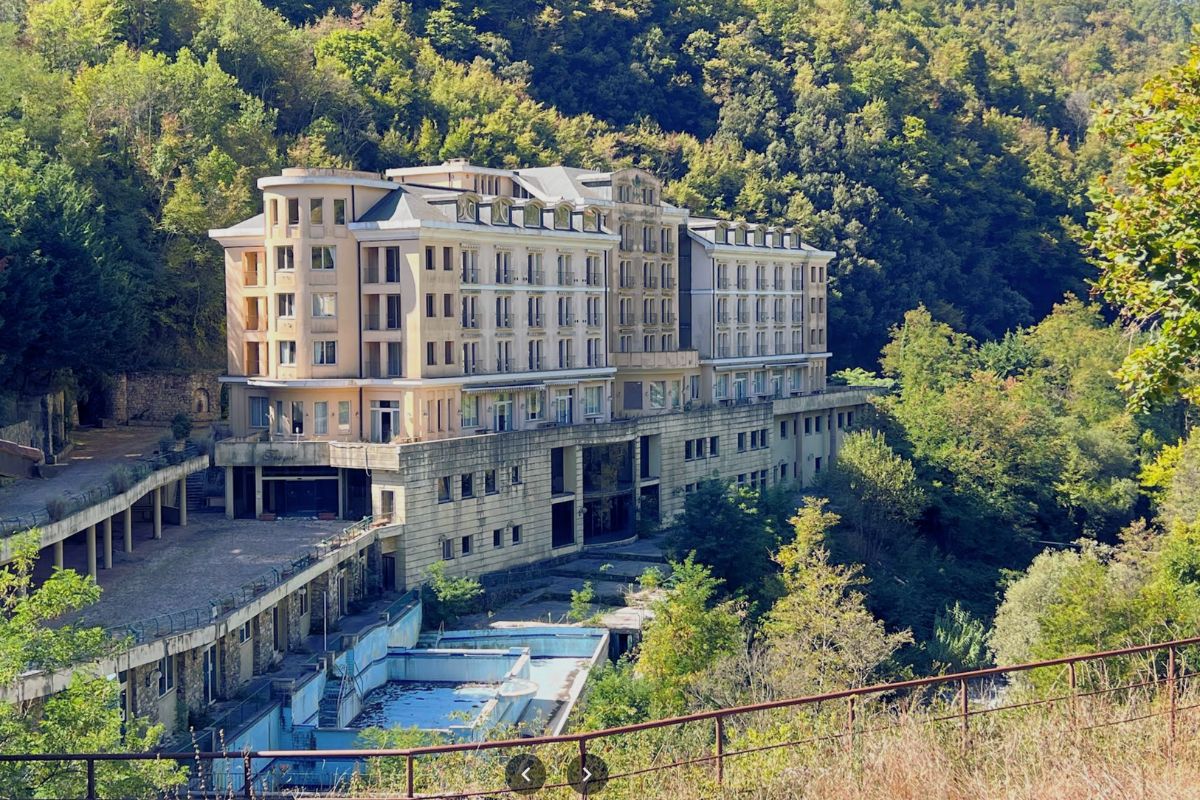
Pigna lies at the upper end of Val Nervia at around 280 m altitude, surrounded by the highest peaks of the Ligurian Pre-Alps — Monte Toraggio (1,973 m) and Monte Pietravecchia (2,040 m), locally called the "Little Dolomites". Around 800 inhabitants, Bandiera Arancione since 2009. The old town is a labyrinth of vaulted, dark lanes — locally called "chibi" — spiralling up the hillside. In the church of San Michele Arcangelo stands a monumental polyptych by Giovanni Canavesio (1500, four metres high), showing Saint Michael battling the devil — one of the most significant artworks in western Liguria. The Madonna Assunta spring with sulphurous water (31°C) has been known since the Middle Ages. The spa "Antiche Terme di Pigna" offers indoor pool, sauna and treatments.
Apricale
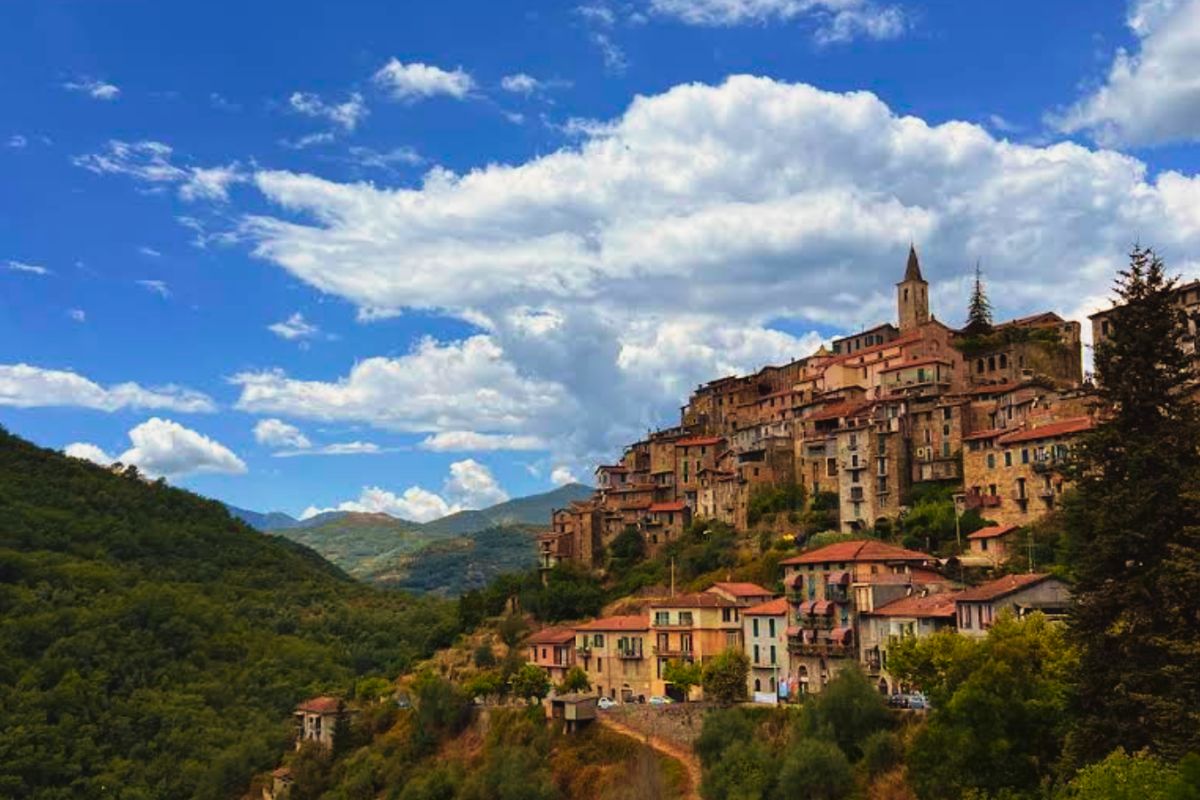
Apricale perches on a hilltop in the Merdanzo valley, a side valley of the Nervia, about 15 km from Ventimiglia. The name comes from Latin "apricus" — sun-kissed. This medieval village from the 9th century belongs to the Borghi più belli d'Italia and holds the Bandiera Arancione from the Italian Touring Club. Around 600 inhabitants, many houses adorned with murals — about 50 today. The heart is Piazza Vittorio Emanuele II, overlooked by the 12th-century Castello della Lucertola and the church Purificazione di Maria Vergine. Apricale has Liguria's oldest autonomous municipal charter: the Statutes of 1267, now displayed in the castle museum.
Rocchetta Nervina
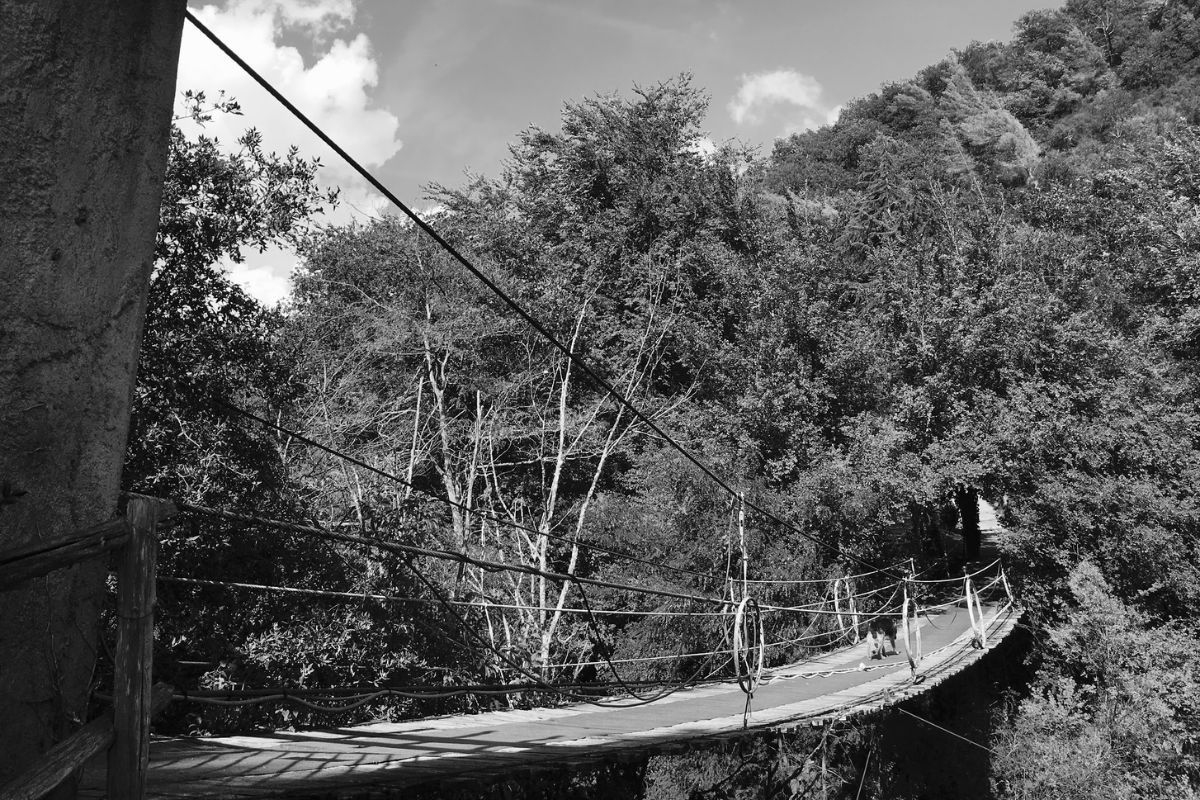
Rocchetta Nervina lies at the end of the valley where the Oggia and Barbaira streams meet — at around 225 m altitude, 13 km from the coast. The village has about 270 inhabitants and a distinctive Y-shape: two rows of houses on rock spurs above the two streams. The tall stone houses on the outer edge once formed the fortification wall. The real highlight are the "Laghetti" — a chain of natural rock pools in the crystal-clear water of the Rio Barbaira. The first pool, "Lago dei 7 Baci", is just steps from the village centre. A 15-minute climb on a Ligurian mule track leads to more pools and a small waterfall. The emerald-green water stays cool even in high summer.
Dolceacqua
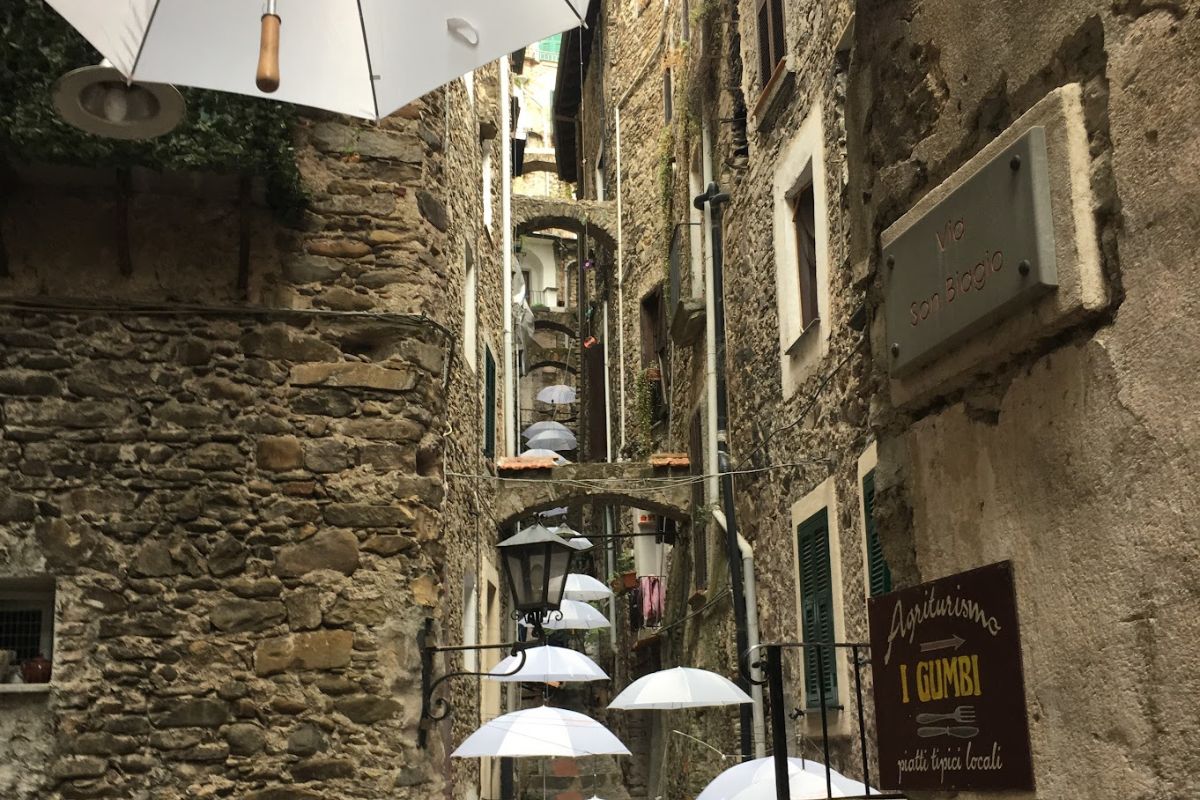
Dolceacqua lies at the entrance to Val Nervia, just 7 km from Ventimiglia. The name traces back to the Roman landowner Dulcius. Around 2,000 inhabitants. The village has two parts: the medieval old town "Terra", climbing the hillside to the castle ruins, and the newer "Borgo" on the opposite riverbank. Connected by the Ponte Vecchio — a 15th-century arch bridge with a 33-metre span that Claude Monet painted several times in 1884, calling it a "jewel of lightness". Above the village stands the ruin of the Castello dei Doria, acquired in 1270 by Oberto Doria and expanded into a residence. The vaulted caruggi are built up to six storeys high in places. Between the lanes: wine cellars and the Rossese di Dolceacqua, Liguria's first DOC wine.
Airole
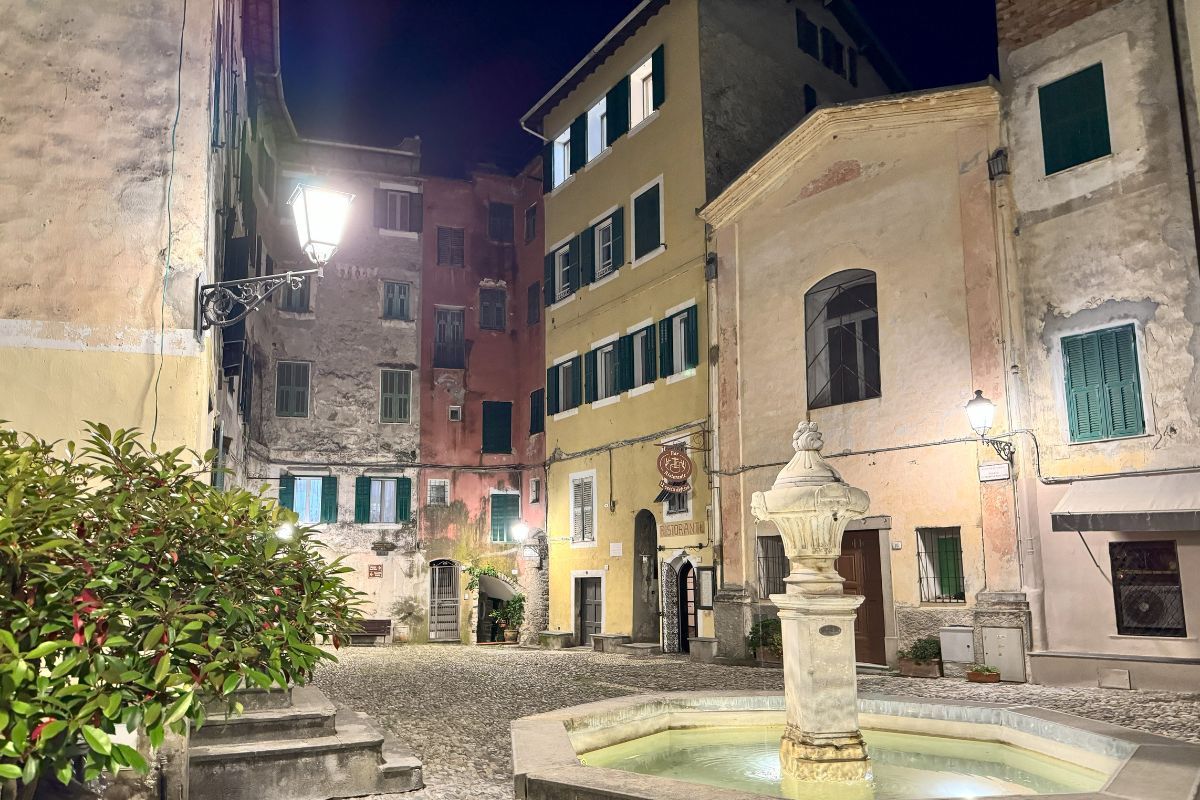
Airole sits on a rocky outcrop above the Roya river, where Liguria meets France. The village has kept its medieval fabric: narrow alleys (caruggi), stone arches, winding stairways. The houses are built from the grey stone of the mountains, and 371 people live here at 149 m elevation. Airole holds the Bandiera Arancione of the Touring Club Italiano. Airole is not a tourist spot and not a museum. It is a village where people actually live — where you buy olive oil from your neighbour and greet each other on the piazza. People gather on Piazza SS. Filippo e Giacomo: mornings for espresso, evenings for aperitivo. The hosts know their guests and the guests know their hosts. One pizzeria run by a German couple, two ristoranti serving Ligurian cuisine, one bar — the village needs nothing more.
Coastal Cities
Ventimiglia for everyday life and history. Bordighera for elegance. Sanremo for the big program.
Camporosso
Camporosso lies at the entrance to Val Nervia, where the river flows into the coastal plain. The name comes from Latin "campus rubeus" — red ground. The village has two parts: the modern coastal strip Camporosso Mare with a 300-metre beach (Blue Flag), and the historic centre inland. A highlight is the Oasi Faunistica at the river mouth, a nature reserve of over six hectares with more than 200 bird species. The Alta Via dei Monti Liguri, the ridge trail spanning all of Liguria, starts in Camporosso.
Vallecrosia
Vallecrosia is 14 km east of Airole, around 7,000 inhabitants. The town is split into two very different parts: the modern seaside resort with almost a kilometre of mainly free beaches, and the medieval borgo of Vallecrosia Alta, about three kilometres inland on a hilltop. The borgo is a well-preserved example of Ligurian village architecture. Narrow caruggi lead past stone houses, small squares and archways. A special feature are the "botteghe immaginarie" — house doors painted with trompe-l'œil murals depicting imaginary shops. In the Parco delle Sette Note stands the Museo della Canzone e della Riproduzione Sonora: a 1910 steam locomotive "Cirilla" and two 1927 Centoporte carriages house a collection on the history of Italian music — instruments, gramophones, music boxes, records. The Romanesque church of San Rocco (c. 10th century) was built on the remains of a Roman temple to Apollo; an ancient inscription dedicated to Apollo is preserved inside.
Ospedaletti
Ospedaletti is 18 km from Airole on the coast between Bordighera and Sanremo, around 3,500 inhabitants. The name goes back to a medieval hospice run by the Knights Templar, which served pilgrims on their way to Rome. In the late 19th century British and Russian winter visitors discovered the sheltered gulf and its mild microclimate. In 1884 Villa La Sultana became Italy's first legal gambling house — in 1905 the licence passed to Sanremo; the villa still stands but without gaming. Today Ospedaletti is quieter than its neighbours — fewer hotels, no nightlife, many retirees — and that is exactly its charm. The Pista Ciclabile on the former railway connects Ospedaletti with Sanremo (6 km) and on towards Imperia — a pleasant cycling and walking path right by the sea.

Sanremo
Sanremo is 30 km east of Airole, with around 54,000 inhabitants. The city owes its fame to three things: the mild climate that has attracted European aristocracy since the 19th century and sustains flower cultivation; the Liberty-style Casino of 1905 — successor to Italy's first legal gambling house, opened in Ospedaletti in 1884; and the Festival della Canzone Italiana, which since 1951 brings the Italian pop world here every February. Belle Époque architecture defines much of the centre — more glamorous and urban than neighbouring Bordighera. Behind it, the old town "La Pigna" (the pine cone) climbs the hillside in concentric rings up to the Sanctuary of Madonna della Costa. Via Matteotti is the main promenade and shopping street. At the harbour, marina follows marina.
Ventimiglia
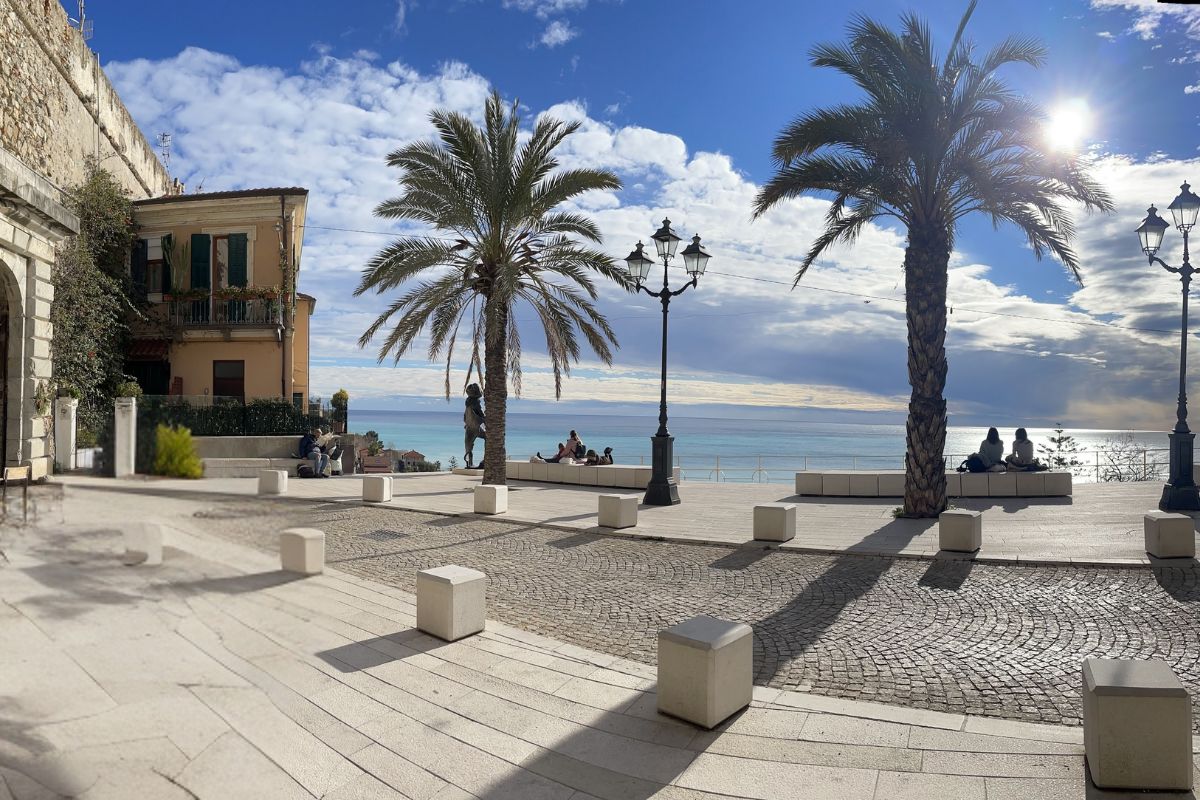
Ventimiglia is 12 km from Airole and the nearest hub for shopping, trains and buses. Around 23,000 inhabitants, right on the French border. The town is split in two: the medieval old town on the hill ("Ventimiglia Alta") with the Cathedral of Santa Maria Assunta from the 11th to the 13th century, and the modern lower town along the sea and the river Roya. The Roman roots are visible — ancient Albintimilium had a theatre and baths from the 2nd to 3rd century AD; their remains can be visited in the archaeological area of the Nervia district, and the theatre is considered the best-preserved of its kind in Liguria. Every Friday the waterfront turns into a vast market with several hundred stalls — one of Italy's best-known weekly markets, drawing visitors from the entire Côte d'Azur.
Bordighera
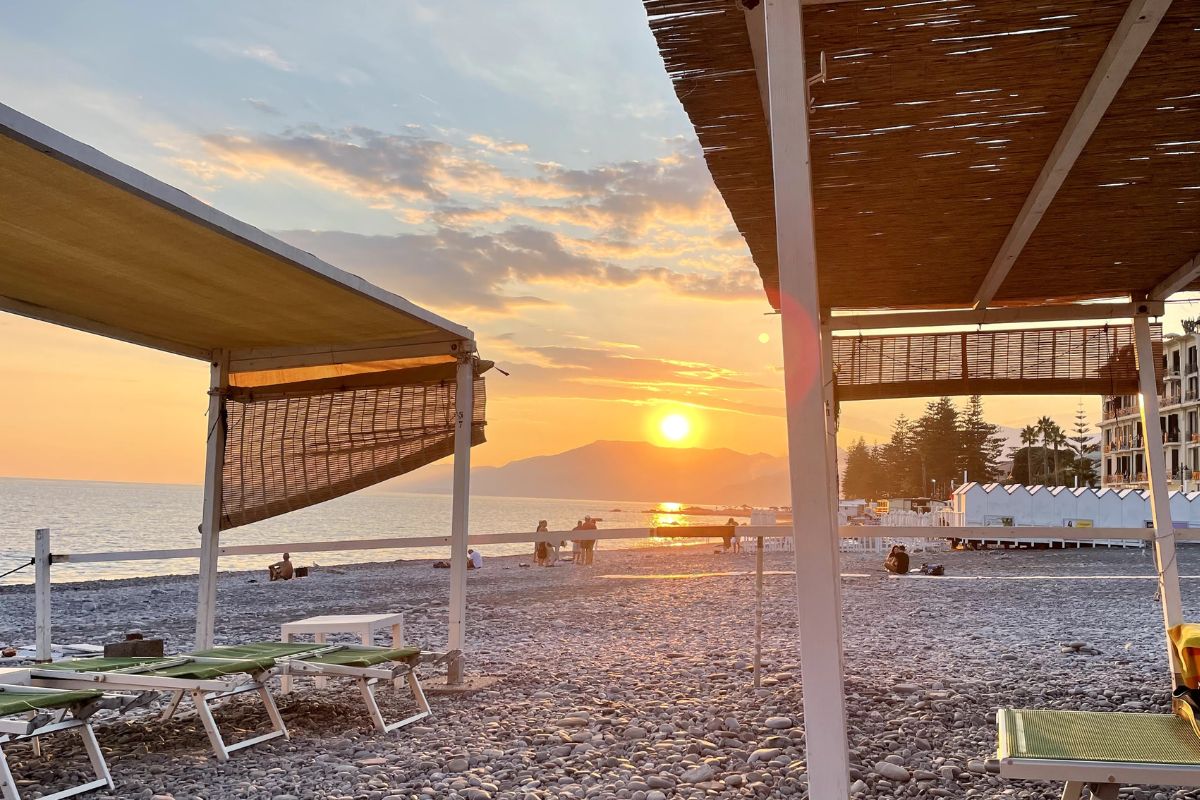
Bordighera is 18 km south-east of Airole, right on the coast between Ventimiglia and Sanremo. Around 10,000 inhabitants, shaped by British winter tourism in the 19th century: the upper town (Bordighera Alta) is medieval, the lower town elegant and flat, with wide promenades, palms and villas. Claude Monet arrived in 1884 for three weeks — and stayed nearly three months. Around 40 works were painted here, including views of the Via Romana and the garden of Villa Garnier. The town also holds a historic privilege: since 1586 it has supplied the woven palm fronds (Parmureli) for Palm Sunday at the Vatican — according to legend as thanks to Captain Bresca of Bordighera, whose timely advice saved the raising of the obelisk on St Peter's Square. Bordighera feels quieter than Sanremo and more elegant than Ventimiglia. No nightlife, no parties — rather strolls, gelato by the harbour, coffee in the shade.
French Side
Different language, different atmosphere - but only ten kilometers away.
Sospel
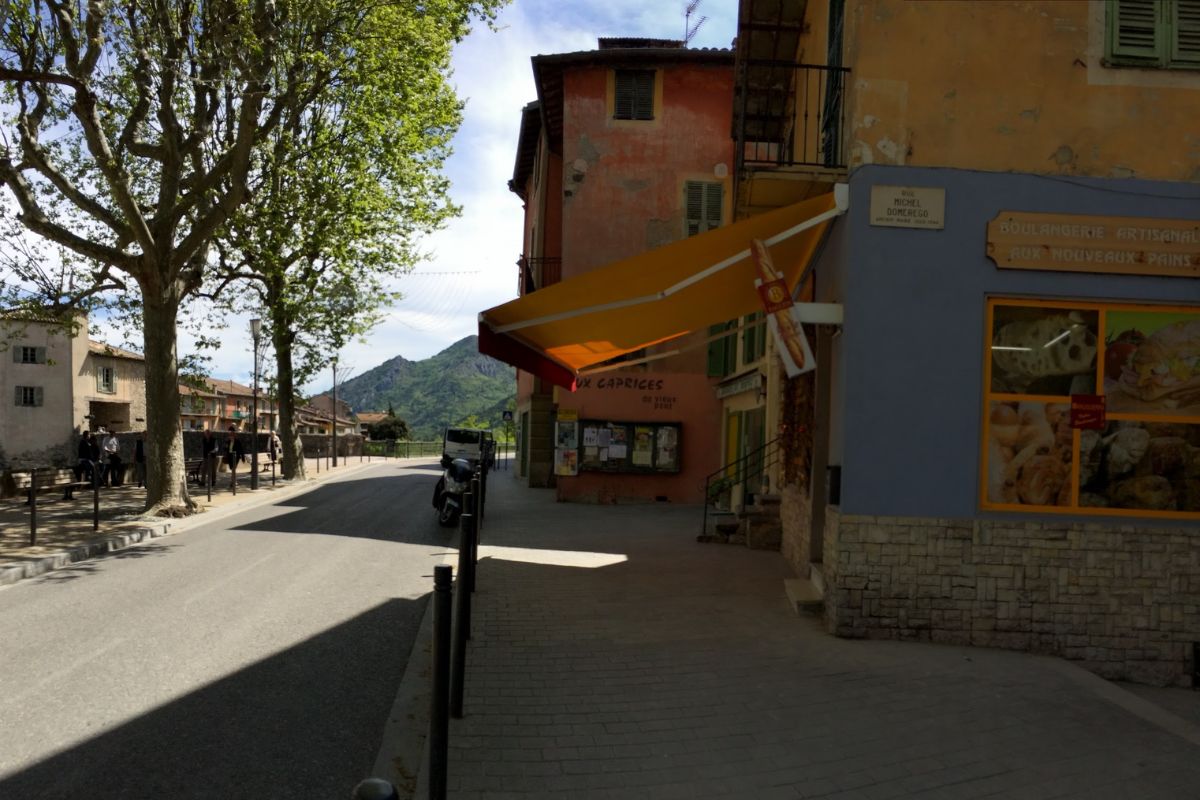
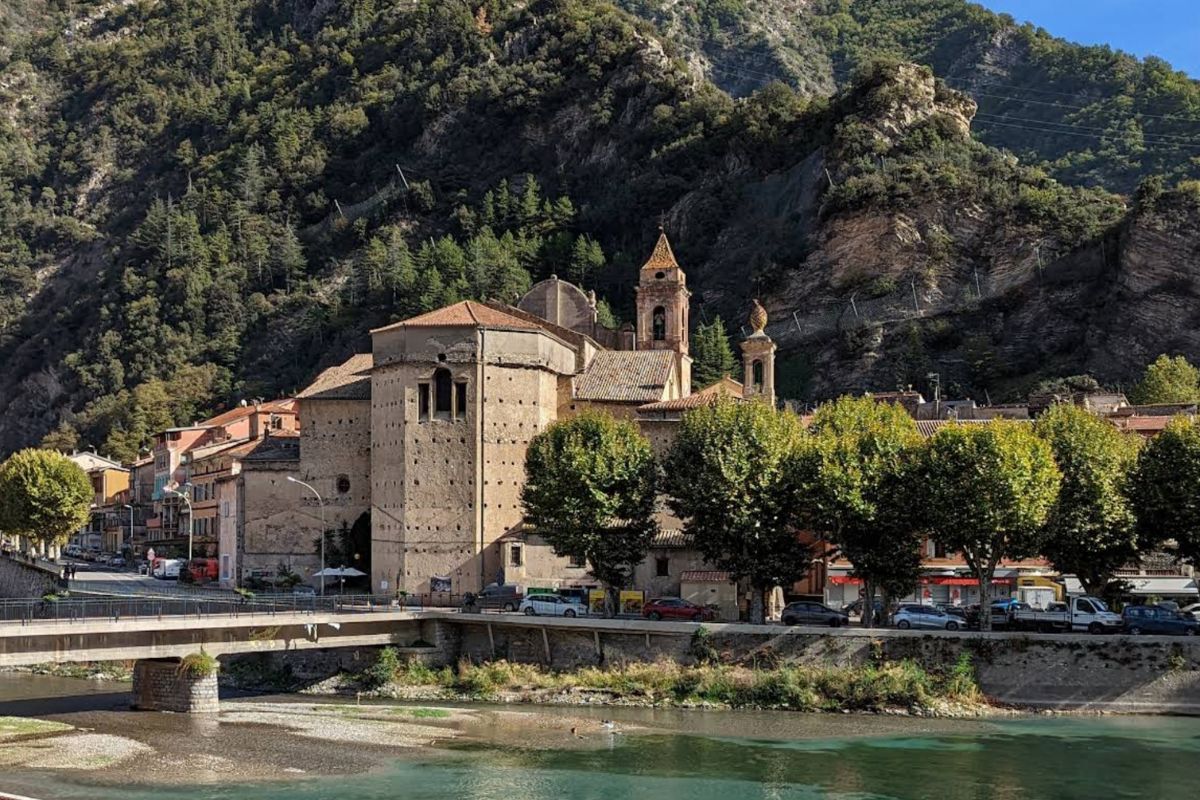
Sospel lies in the Bévéra Valley at around 350 m altitude, about 20 km and 35 minutes from Airole, with around 3,800 inhabitants. Its landmark is the Pont Vieux — a fortified toll bridge with a central tower, first documented in 1217 and rebuilt in stone in 1522. One of the last surviving structures of its kind in Europe. The bridge was a station on the salt route between Nice and Piedmont. The old town stretches along both sides of the Bévéra with winding lanes, Gothic houses and trompe-l'œil facades along the riverbank. On Place Saint-Michel stands the baroque Cathedral Saint-Michel (1641–1762) with a 13th-century Romanesque bell tower — one of the largest churches in the Alpes-Maritimes. Sospel is no sleepy museum village but an active little town with shops, restaurants and a lively Thursday market. In World War II the bridge was destroyed in 1945 and faithfully rebuilt in 1952.
Breil-sur-Roya
Breil-sur-Roya sits in a wide bend of the Roya river, surrounded by around 100,000 olive trees. With about 2,300 inhabitants, it is the largest village in the upper Roya Valley and an important stop on the Tenda Railway (Train des Merveilles). At around 300 m altitude, with Mercantour National Park in sight and the Mediterranean just 25 km away, the microclimate is milder than in the surrounding mountain villages. The river splits the village in two, connected by several bridges. In the centre lies an artificial Swan Lake (Lac aux Cygnes). The old town features vaulted arcades, narrow lanes and the baroque church Sancta Maria in Albis. The Saint-Jean bell tower with its Romanesque twin openings is the oldest Romanesque monument in the former County of Nice. Breil was for centuries a centre of olive oil production for the House of Savoy. Its turbulent history lives on in the festival "A Stacada": every four years, over 100 amateur actors re-enact the revolt against the "droit de cuissage" — one of the oldest traditions of the region.

Nice
Nice, with around 350,000 inhabitants, is France's fifth-largest city and the centre of the Côte d'Azur. The old town (Vieux Nice) wedges between the Castle Hill (Colline du Château) and the Promenade des Anglais — seven kilometres of waterfront along the Bay of Angels. Historically Sardinian-Piedmontese until 1860, when it became part of France — hence the Italian echoes in cuisine (Socca, Pissaladière, Pan bagnat, Salade Niçoise) and architecture. Museums: Matisse (in Cimiez), Musée Marc Chagall, MAMAC. Markets: Cours Saleya — flower and food market Tuesday to Sunday, antiques and brocante on Mondays. For a first visit, Vieux Nice, the Promenade, Cours Saleya and one museum are enough — the rest takes more days.

Menton
Menton is 20 km west of Airole, just across the Italian-French border. Around 30,000 inhabitants, the mildest climate on the French Riviera — frost is rare, and summer highs are lower than in Nice. The microclimate allows citrus cultivation, especially the Menton lemon, which has held a Protected Geographical Indication (IGP) since 2015. Every February the Fête du Citron takes place — gigantic sculptures of lemons and oranges fill the Jardins Biovès, with illuminated parades ("Corsos des Fruits d'Or") in the evening. The rest of the year the town is quieter. Jean Cocteau left his mark in Menton: the Musée Jean Cocteau with the Séverin Wunderman collection by the harbour, and the murals in the town hall wedding room that he painted in 1957.
Gardens & Museums
An English merchant created a botanical garden. A museum shows finds from the Stone Age. The region surprises.
Hanbury Botanic Gardens
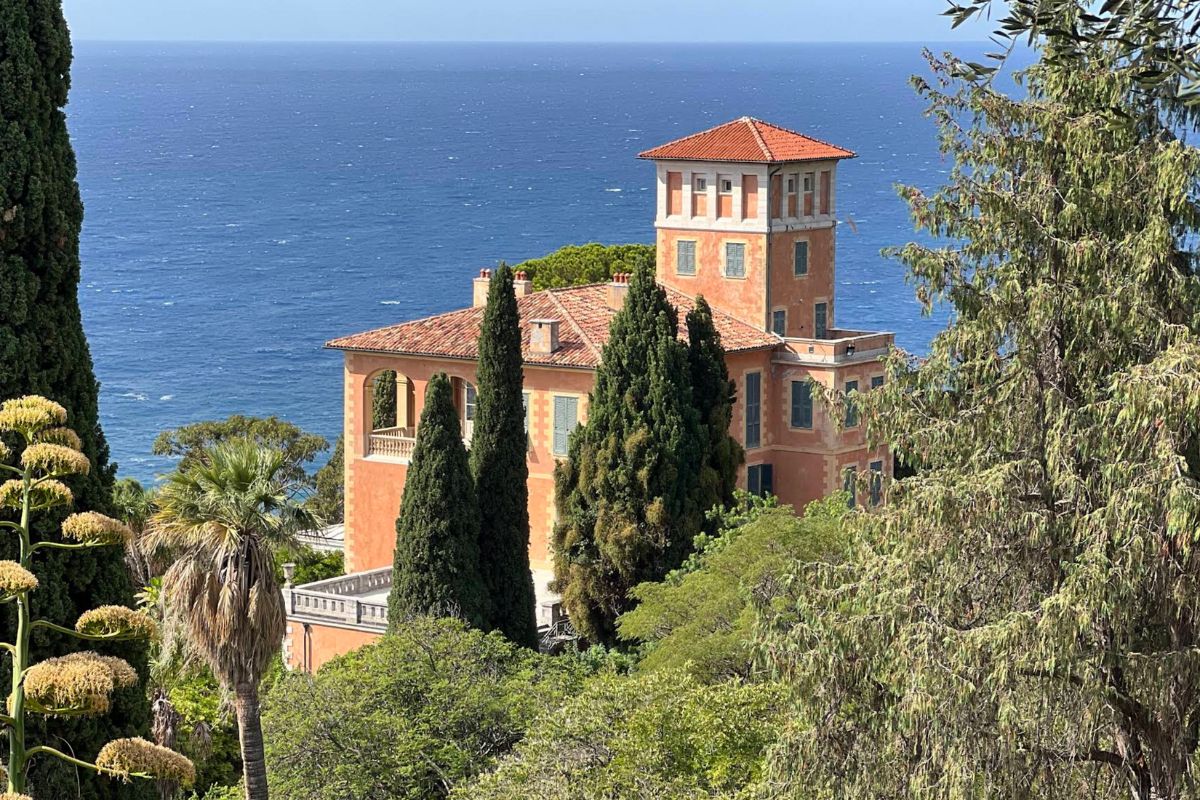
The Hanbury Botanic Gardens sit on the Capo Mortola promontory, about 18 km from Airole, right at the Italian-French border. Thomas Hanbury purchased the grounds around Villa Orengo in 1867 and, together with his brother Daniel, created a botanical garden now managed by the University of Genoa. The garden cascades from the cliff edge down to the sea. Around 5,800 plant species from every continent, many of them rare or first introductions to Europe. The layout follows terraced slopes: the villa at the top, then rose beds, a citrus avenue, Australian eucalyptus sections, tropical zones, orchards, herb gardens, and finally the sea. The Via Julia Augusta — a preserved section of the ancient Roman coastal road — runs through the garden.
Exotic Garden of Èze
The Jardin Exotique sits atop the medieval village of Èze, between Nice and Monaco. Created in 1949 on the ruins of a castle demolished in the 18th century, it is now one of the best-known botanical gardens on the Côte d'Azur. The collection features mainly cacti and succulents from Africa and the Americas, arranged on terraces. Among the plants stand terracotta and bronze figures by sculptor Jean-Philippe Richard, installed since 2004. The real draw is the view: on clear days all the way to Corsica, east to Italy, west over Cap Ferrat. Èze itself is a medieval "village perché" and one of the most visited villages on the Côte d'Azur.
Cultural Venues & Festivals
Jazz concerts in the valley, open-air cinema under the stars, local festivals. The region has a rich cultural program.

Jazz Valley Val Nervia
Jazz Valley is an inter-community concert series in which several villages of the Val Nervia have joined forces to bring high-quality jazz music into their historic town centers. What began in 2024 as a pilot project by three municipalities quickly developed into a fixed date in the valley's cultural calendar. In 2025, already four communities are participating: Pigna, Rocchetta Nervina, Dolceacqua, and Camporosso. The organizers hope to further expand the festival. The special feature: Instead of a large stage with massive crowds, jazz is experienced here on village squares, in community gardens, and on panoramic terraces. The atmosphere is relaxed and convivial – locals and tourists sit together under the open sky and enjoy the music. The artistic direction is in the hands of Giuliano Raimondo, one of the most renowned jazz bassists of Ponente Ligure, who also plays at some concerts. He selects the artists and ensures a high-quality program beyond the mainstream.
Pro Loco Airole
Non-profit association dedicated to promoting tourism and preserving local traditions. Organizes events, festivals and operates the Adventure Park.
Good to know
Opening Hours
Many small museums have limited hours - often only afternoons, often not Mondays. Check beforehand.
Parking
In mountain villages park outside and walk in. In coastal cities: parking garage or arrive early.
Beliebte Kombinationen
Village and Beach
Visit Dolceacqua, then to the Laghetti. Or: explore Menton, then to the beach.
Place and Restaurant
Visit Apricale, then eat in the neighboring village. The villages are close together.
Village and Beach in One Day
Visit Dolceacqua, then to the Laghetti. Explore Ventimiglia, then to the beach. The distances are short.